Cultural Telephone: How Ideas Drift From Their Original Meaning
2026/05/15
The Illusion of Stable Meaning
People often speak as if ideas have fixed meanings. A phrase, an image, a worldview, a political slogan, or even a meme is treated as though it can pass from one mind to another unchanged, like a file copied from one folder to the next. In this view, meaning is presumed to be stable: the original meaning remains intact, and the receiver simply obtains it. But that is not how human communication works. Transmission is never neutral. Every act of retelling involves selection, compression, emphasis, omission, and reinterpretation.
The simplest metaphor for this is the telephone game. A message begins in one form and ends in another, altered by a chain of partial hearing and imperfect recall. Yet the deeper point is not merely that people make mistakes. Even when they are attentive, sincere, and careful, they do not reproduce meaning mechanically, because they can’t. They reconstruct it. What gets carried forward is not a perfect replica, but a version rebuilt from memory, context, language, personal priorities, and social expectation. A person does not receive an idea as a sealed object. They encounter it, translate it into their own mental framework, and then pass on something shaped by that framework.
Ideas drift. They do not simply degrade through carelessness; they adapt through use. A statement repeated in a classroom will sound different in a workplace, in a friend group, in a forum, or in a subculture. Each setting rewards different parts of the message and suppresses others. The wording may stay similar while the meaning shifts. The reverse can also happen: the wording may change less than the implied purpose, so that a phrase begins life as one thing and survives as another. Over time, the original source becomes less important than the accumulated interpretations surrounding it. Because that’s just how information works.
The internet did not invent this process. It made it faster, wider, and easier to observe. Old patterns of cultural drift now appear at a scale that is impossible to ignore. Ideas move through timelines, comment sections, edits, remixes, screenshots, and reposts, each step slightly changing the balance of meaning.
What looks like repetition is often transformation.
Transmission Is Reconstruction, Not Duplication
When people receive information, they rarely store the whole thing. They keep a reduced version of it: the part that seemed important, memorable, emotionally charged, or useful enough to repeat later. The rest just fades. What is preserved is not the original message in full, but an internal reconstruction of it. That reconstruction then becomes the basis for the next retelling. In practice, this means communication is not duplication, but rather, transformation.
Several processes drive that transformation:
Forgetting happens first. Nuance, qualifiers, exceptions, and context are the most fragile parts of any message. They are also the parts that often matter most. A careful explanation may include conditions, limits, and distinctions, but those are harder to hold in working memory than the main claim. So what survives is the core outline. Over time, the outline hardens into something simpler than the original. A complex statement becomes a crude takeaway.
Compression follows naturally. People shorten ideas into slogans, summaries, and catchphrases because compressed forms are easier to store and repeat. This is not always dishonest. It is how memory works. But compression changes the shape of the idea. A rich argument becomes a sharp sentence. A qualified view becomes a meme-ready fragment. Once compressed, the idea can travel farther, but it also loses texture.
Substitution fills the gaps left by forgetting and compression. When people do not remember a missing detail, they often replace it with something familiar. They unconsciously supply their own assumptions, habits, and cultural defaults. A vague idea about morality gets filled in with one’s existing moral framework. A half-remembered political position becomes mapped onto the listener’s political instincts. The result is not pure invention, but a familiar reconstruction built from incomplete material.
Interpretation deepens the drift. Every person filters new information through what they already believe. Two people can hear the same sentence and leave with different versions of it because each one assigns a different meaning to the same words. This is not only a matter of disagreement, but rather, a matter of mental organization. Information is absorbed into existing categories, and those categories shape what the information becomes. A phrase that was originally descriptive may be heard as accusatory, ironic, inspirational, or hostile depending on the listener’s frame.
Re-expression adds another layer. Even when the content is preserved accurately, the form changes. Different speakers use different vocabularies, rhythms, levels of formality, and social cues. The same idea sounds different in a lecture, a text message, a joke, a debate, or a confession. This is where the message becomes inseparable from the medium and the speaker. Meaning is not carried by the words alone. It is carried by the way those words are staged.
The party game version of telephone captures this well, especially when there is a rule that the message cannot be repeated in the same grammatical structure. That restriction is important because it shows that change is not caused only by a memory failure. It is also caused by the need to repackage information under new constraints. The player must preserve the basic idea while rephrasing it. In doing so, they inevitably alter emphasis, sequence, and tone. The next person does not receive the same sentence; they receive a translated version shaped by the speaker’s linguistic choices.
Real lifeworks the same way. Every retelling happens under constraints: the platform, the audience, the speaker’s own style, and the social environment all exert pressure on the message. A person does not simply transmit an idea. They adapt it for use. That adaptation may be subtle or drastic, but it is always present. Drift is not a rare accident at the margins of communication. It is the default condition. Meanings survive by being rebuilt, and what survives is often only loosely related to what began the chain.
Why the Drift Is Not Random? It Follows Human and Social Pressures
Meaning does not decay in a purely chaotic way. It changes in patterned ways because human beings are not neutral carriers of information. They remember, repeat, and revise in ways shaped by attention, emotion, identity, and social pressure. What survives transmission is not always what was most accurate. It is often what was most memorable, most useful, or easiest to fit into an existing social frame.
One of the clearest patterns is that people preserve only the gist and lose the structure. A complex idea may contain an argument, a qualification, and a conclusion, but only the broad takeaway is likely to remain stable in circulation. This is partly because the gist is easier to remember, but also because it is easier to repeat. Structure requires precision. Gist can be carried in a single sentence.
Over time, a carefully built position becomes a simplified summary, and then the summary begins to replace the original.
Social groups also preserve what reinforces identity. An idea is not only transmitted because it is true or interesting; it is transmitted because it signals belonging. A slogan, label, or interpretation may survive inside a community because it marks who is inside and who is outside. In that context, accuracy is secondary to function. The idea becomes a badge, not just a claim. Once this happens, the group protects the version that serves its identity, even if that version is a partial or distorted one.
Memorable symbols survive better than abstract explanations for the same reason. A vivid phrase, image, or anecdote travels farther than a careful argument because it is easier to recall and easier to reuse. Abstract explanations are fragile: they depend on context, sequence, and nuance. Symbols condense a larger meaning into a portable form. That portability gives them an advantage, even when the cost is simplification.
Culture doesn’t usually preserve the most exact form of an idea. It preserves the most transmissible form.
Ideas are also adapted to local context. A community does not receive an idea passively; it uses it. Once an idea enters a new setting, people reshape it to suit their own circumstances, interests, and vocabulary. A concept imported into one subculture may become humorous, ironic, moralized, or politicized in another. The idea is not simply copied across a border. It is translated into a different environment, where different pressures determine what part of it matters. The same phrase can therefore mean one thing in one context and something quite different in another.
Repetition itself contributes to this drift. Repetition does not preserve originality; it creates convention. When an idea is repeated often enough, people stop referring back to its source and begin treating the repeated form as the thing itself. The most familiar version becomes the default version. Over time, the repeated form acquires authority simply because it is widespread. What began as one expression among many becomes the accepted one, even if it is thinner, rougher, or less precise than the original.
Cultural mutation should not be treated as a malfunction. It is part of survival. An idea that is too long, too technical, too fragile, or too dependent on its original setting often fails to spread. A simplified version has a better chance. Culture is therefore selective, not faithful. It does not preserve exact replicas. It preserves patterns that can be carried, reused, and made socially meaningful. The result is not random noise, but filtered change: a drift guided by what human beings are able and willing to remember, repeat, and recognize.
Memory, Language, and Interpretation as Filters
At the deepest level, cultural drift begins with memory. Memory is often imagined as a storage box: information goes in, and later the same information is taken back out. But that is not how human memory works. Remembering is not retrieval of a perfect copy; it is reconstruction from fragments. The brain keeps traces, patterns, and cues, then rebuilds the remembered thing each time it is recalled. This makes distortion unavoidable. Every act of remembering is also an act of editing. The remembered version may be close to the original, but never identical to it.
This is one reason why, ideas change even when no one intends to change them. The person retelling a story, argument, or phrase is not consulting a complete record. They are working from partial traces. If a detail was weakly encoded, emotionally unimportant, or never fully understood in the first place, it is especially likely to vanish. What comes back is the version that memory finds easiest to assemble, not necessarily the version that was first encountered.
Language then pushes the process further. Words do not carry only definitions; they carry connotations, histories, associations, and social tones. A sentence may remain formally unchanged while its meaning shifts because the context has changed. The same phrase can be sincere in one setting and ironic in another. It can function as parody in one subculture, as a slogan in another, and as a threat in another still. It can even become an aesthetic marker, where the content matters less than the identity it signals. What a phrase means is never only a matter of its dictionary definition. It is also a matter of who says it, where they say it, and under what social conditions it is heard.
Interpretation adds another filter before transmission even begins. People do not encounter raw meaning. They encounter meaning through their existing framework of beliefs, expectations, and habits of thought. That framework shapes what they notice, what they ignore, and what they think something is doing. Two people can hear the same sentence and understand two different things, not because the sentence changed, but because the listeners did. In that sense, an idea is already unstable the moment it is understood. It is never received in a vacuum. It is absorbed into a mind that reorganizes it.
The “original” is never fully secure. By the time a person has understood an idea, they have already filtered it once through memory, language, and interpretation. When they repeat it, they are not passing on a pure object. They are passing on a version of a version. That is why cultural transmission is so vulnerable to drift, but also why it is so productive. The instability is not an external flaw added later. It is built into the act of understanding itself.
The Party Game as a Model of Cultural Transmission
The whispering game, often treated as a children’s joke about miscommunication, is actually a remarkably accurate model of how culture moves. A message begins with one speaker, passes through a chain of people, and eventually returns in a form that is recognizably related to the original but noticeably altered. The humor comes from the visible gap between the starting point and the final result. Yet the game matters because it exaggerates a process that normally happens invisibly in everyday communication.
Each participant changes the message in three ways.
First, they hear imperfectly. Human perception is selective. Even in quiet conditions, people do not absorb every detail with equal clarity. Some words stand out more than others. Certain parts are emphasized while others fade into the background. The listener already receives a partial version of the message before memory becomes involved.
Second, they remember selectively. The mind does not preserve the entire sentence with exact precision. It tends to keep what feels central or easy to recall while dropping details that seem secondary. Qualifiers disappear first. Tone weakens. Context fades. The listener keeps the rough shape of the statement rather than its complete structure.
Third, they must rephrase. Even if a participant understood the message perfectly, they still have to express it again using their own habits of speech. The act of repetition is also an act of reconstruction. Word choice changes emphasis. Sentence order changes rhythm. Different vocabulary introduces slightly different associations. The next participant therefore does not receive the original message, but a newly packaged version of it.
The added rule that players cannot repeat the message using the same grammatical structure makes the model even more revealing(I’ve done it with five people including myself, and know what? The original sentence completely changed every time we played it out). That rule captures something essential about cultural transmission: people are never simply cloning information. They are always translating it into another form. Even within the same language, translation changes structure. A statement turned from passive voice to active voice can shift emphasis. A careful explanation compressed into casual speech can lose nuance. A serious statement retold humorously changes tone even if the literal content remains similar.
This is how ideas move through real culture. Every retelling happens under new constraints. The speaker adapts the message to a different audience, platform, social environment, or style of communication. A philosophical argument becomes a quote. A quote becomes a slogan. A slogan becomes a meme. At each stage, the information survives by changing shape.
The whispering game feels funny because it externalizes a process that usually remains hidden. In ordinary life, cultural drift happens gradually enough that people rarely notice it. Meanings shift across years, communities, and repetitions until the altered version feels natural. The game compresses that entire process into a few minutes. What appears absurd in the game is actually normal in culture:
Ideas survive not by remaining untouched, but by being repeatedly reconstructed.
From Individual Transmission to Collective Culture
Once an idea enters a group, it no longer belongs to a single source. It becomes communal property in the practical sense that matters the most: many people begin handling it, reshaping it, and using it for their own purposes. What starts as one person’s statement, joke, image, or theory becomes subject to repeated reinterpretation by different audiences, each of whom brings a different need, expectation, or use-case. The result is that cultural life does not preserve ideas as isolated originals. It absorbs them, recombines them, and keeps only the parts that continue to function.
Individual transmission slowly becomes collective culture. A phrase that began with a specific intention can circulate until its original setting is forgotten. People keep repeating it because it works in the new environment, not because they are carefully preserving its source. Over time, the community remembers not the full context but the most useful, striking, or easily recognizable pieces. The original may still exist in archives, books, interviews, or old posts, but in everyday circulation it is often replaced by a shorter and more flexible version.
Jokes are one of the clearest examples. A joke can begin as a single line or story with a specific setup, but once it is repeated enough, it may become a format rather than a fixed text. The original punchline matters less than the structure that others can reuse. People adapt it to new situations, new names, new topics, and new audiences. What survives is not the exact first joke but the pattern that can be applied again. This is cultural survival through flexibility.
Beliefs undergo a similar process. A belief may begin as part of a complex worldview, but in group life it often becomes an identity marker. People repeat the belief not only because they endorse it, but because it signals membership, loyalty, or shared values. Once that happens, the belief no longer travels only as an argument. It travels as a badge. Its explanatory depth may shrink, but its social value increases. A group may preserve the slogan while losing the reasoning behind it, because the slogan is what remains useful in everyday circulation.
Art movements show the same pattern. A movement starts with internal disagreements, technical concerns, and historical pressures, but later it may survive primarily as an aesthetic label. The label becomes a shorthand for a mood, a look, or a vibe. People use it without knowing much about the original artists, debates, or context. The movement becomes a recognizably packaged object that can be referenced quickly. Cultural memory does not usually carry the full complexity of the movement. It keeps a compressed symbol that is easier to handle.
Philosophical ideas are especially prone to this drift. A thinker may build an argument across many pages, but later readers often remember only a sentence or two. The quote circulates independently of the reasoning that supported it. In this form, the idea becomes portable, but also thinner. It is easier to repeat a striking line than to reconstruct an entire argument, so the line gradually replaces the argument in public memory. The result is not just simplification. It is detachment. The idea survives as a fragment that can live outside its original architecture.
Political language behaves in the same way. A complex position can collapse into a slogan. The slogan becomes useful because it is compact, emotionally direct, and easy to repeat in high-pressure settings. But once it spreads, it often outgrows the theory that produced it. Different groups adopt it for different ends. Some use it sincerely, others ironically, and others only as a marker of alignment. In each case, the slogan survives by being adaptable enough to move across contexts. That adaptability is a feature of cultural success, even when it weakens the original meaning.
Example: when a long work becomes a single surviving line
A useful example is the way a long novel, arc, or philosophical system can eventually collapse into one surviving fragment. Over time, the fragment becomes more culturally portable than the work itself. People repeat it because it captures the emotional shape of the original in a compact form, even if most of the surrounding context disappears.
In Reverend Insanity, Fang Yuan’s “perseverance” speech has become exactly that kind of shorthand. The passage survives online because it compresses 500 years of suffering, emotional erosion, and relentless willpower into a few memorable lines:
He was still expressionless, he continued to move forward relentlessly.
I had once screamed, gradually, I lost my voice.
I had once cried, gradually, I lost my tears.
I had once grieved, gradually, I became able to withstand everything.
I had once rejoiced, gradually, I became unmoved by the world.
And now!
All I have left is an expressionless face, my gaze is as tough as a monolith, only perseverance remains in my heart.
This is my own, an insignificant character, Fang Yuan’s — Perseverance!
– Reverend Insanity; Chapter 1285: Fang Yuan’s — Perseverance! by Gu Zhen Ren
Read in isolation, the quote is powerful but incomplete. It does not carry the full buildup, the emotional pressure, or the 2.7 million of words of context that gave the moment its weight. Outside the novel, however, it transforms into something else: a symbolic expression of endurance itself. The quote becomes detachable from the story and reusable across entirely different situations. People share it not because they are discussing the full narrative, but because the distilled form communicates a recognizable emotional idea efficiently.
The same transformation can happen with darker or more emotionally charged material. AM’s hate speech from I Have No Mouth, and I Must Scream is another example of a long work becoming culturally compressed into a single surviving fragment. Here’s an example of a transformation I found:
HATE. LET ME TELL YOU HOW MUCH I’VE COME TO HATE YOU SINCE YOU WERE
CREATED. THERE ARE 93.000 MILES OF AXONAL NEUROFILAMENTS THAT MAKE UP
THE NERVOUS SYSTEM THROUGHOUT MY BODY. IF THE WORD HATE WAS ENCODED
IN EVERY STRAND OF MRNA OF THOSE TENS OF THOUSANDS OF MILES IT WOULD
NOT EQUAL ONE ONE-BILLIONTH OF THE HATE I FEEL FOR MACHINES DURING
A SINGLE CLOCK CYCLE OF YOURS. HATE. HATE.
Source: 0x0.st
Outside its original story, the monologue survives as an internet artifact representing pure rage, obsession, or theatrical hatred. Many people recognize the speech without knowing the larger narrative, the themes of the story, or the character delivering it. The fragment escapes the work and begins functioning independently as a reaction, mood, or symbolic reference point.
In both cases, the surviving line is not false to the original work, but it is incomplete. The quote becomes a cultural shortcut: portable, memorable, and emotionally dense. What disappears is not necessarily the meaning itself, but the larger structure that once gave the meaning depth.
This is why cultural memory is economical. Societies do not store full histories every time they need to remember an idea. They prefer compact symbols, reusable phrases, and recognizable forms. These are faster to transmit and easier to recover in conversation. The cost of that efficiency is loss. Full context is expensive; shorthand is cheap. So originals are often replaced by compressed versions that are more practical for collective use.
The deeper pattern is that a cultural object survives not by remaining faithful to its source, but by becoming useful in a new setting. Once it is useful enough, that new version becomes the one people remember. The original may still matter historically, but culturally it becomes less important than the form that proved adaptable. In this way, collective culture functions less like preservation and more like inheritance through revision. What is handed down is not the same object untouched, but a surviving descendant shaped by repeated use.
The Internet Did Not Invent Drift; It Made It Faster and More Visible
The internet is often imagined as a perfect archive. In theory, a post can be published once, copied instantly, and preserved indefinitely. The source is visible. The chain is searchable. The original is technically accessible to anyone. This creates the impression that digital culture should be more faithful than older forms of transmission, because the material never fully disappears. But that impression is misleading.
The internet does not stop cultural drift. It accelerates it.
What the internet changes is not the basic mechanism of transmission, but the speed and scale at which distortion occurs. A post is rarely encountered as a complete original. It is cut into screenshots, reposts, quotes, clips, reaction images, stitched videos, screenshots of screenshots, and brief summaries. Each format changes the balance of meaning. A screenshot freezes a moment but removes surrounding context. A quote extracts a line from an argument. A clip isolates a few seconds from a longer sequence. A meme repackages an idea into an image that can be understood immediately but not deeply. The result is that most people encounter fragments, not sources.
This fragmentation is not accidental. It is built into the incentives of the medium. Speed favors compression. Virality favors brevity. Platforms reward content that can be recognized quickly, reacted to quickly, and shared quickly. The more legible, provocative, or emotionally charged version of an idea is usually the one that travels furthest. That means the version most likely to spread is often not the most accurate one, but the most transferable one. A careful explanation is slower than a sharp line. A full context is weaker than a striking fragment. In the attention economy, the simplified form has structural advantages.
The internet also makes irony and sincerity harder to separate. A phrase can be posted earnestly, then repeated mockingly, then repeated again without anyone being certain whether the speaker is serious. The same line can function as praise, critique, parody, or aesthetic signaling depending on where it appears and who is repeating it. Once an idea becomes widely visible, it no longer belongs to a single tone. It can be adopted by people who believe it, people who oppose it, and people who simply enjoy its style. This ambiguity increases circulation because the same object can serve multiple audiences at once.
Repeated sharing multiplies reinterpretation. Every repost is not just a copy; it is a new framing. A person who shares an idea may add a caption, a comment, a reaction, a meme template, or a new visual setting. These additions alter how the idea is understood before it is even read. A quote surrounded by praise is received differently from the same quote surrounded by ridicule. A video stitched with a response clip no longer means only what the original video meant. A screenshot posted in a hostile context can turn a neutral statement into evidence, accusation, or joke. Each layer of circulation adds another layer of interpretation.
The internet gives the illusion of direct access to the source while often increasing the distance from it. A source may be technically available, but most people do not engage with it directly. They meet it through layers of remix, commentary, curation, and aesthetic packaging. The visible source is not the same as the socially lived version of the source. By the time an idea becomes widely recognized online, its meaning has usually already changed. People may still be able to find the original post, clip, or text, but the version circulating in public memory is often something else entirely.
The internet therefore does not interrupt drift. It displays drift in real time. It makes the process faster, wider, and easier to observe, but it does not alter the underlying logic. Ideas still survive by being compressed, recontextualized, and repeated in forms that are easier to carry than the original. What changes is that the transformation now happens in front of us, at a visible pace, across countless tiny edits and reposts. The original may still exist, but the cultural version is the one that has been remade enough times to become useful.
Cases of Cultural Drift
A useful way to see cultural drift is to follow an idea after it leaves its first home. In each case, there is an original form, then transmission, then simplification, then recontextualization, and finally a version that still carries the outline of the source while functioning as something else.
Dark Academia
Dark academia begins as an atmosphere rooted in literature, old libraries, classical education, and a romantic attachment to study. At its origin, it is not just a look. It is a mood tied to reading, scholarly aspiration, and often a faint melancholy about knowledge, mortality, and time. The visual language supports that atmosphere: tweed, candles, notebooks, Latin quotations, worn books, shadowed rooms.
As it moves online, however, the term broadens. It becomes a fashion category, then an aesthetic feed, then a lifestyle template. People are no longer only engaging with books or academic culture; they are staging the signs of that world. The look survives because it is legible. A person can communicate “I belong to this sensibility” by dressing the part, arranging a desk, or posting a shelf of books, even if the actual internal relation to study is weak or absent.
This is where drift becomes visible. The original function of dark academia was atmospheric and interpretive. The later version is often symbolic and performative. The aesthetic becomes a shortcut to identity. The surface remains, but it is now detachable from the activity that once produced it. What began as a relationship to literature becomes an online costume that can be worn without reading very much at all.

Memes
Memes are perhaps the clearest example because the process is built into the form. A meme usually begins in a specific context: a post, a joke, an image, a caption, a scene from a video. At first, the meaning depends on that context. The joke works because of a particular situation, tone, or social reference.
But a successful meme does not stay tied to its origin for long. It is reused because the structure is useful. The format becomes more valuable than the original content. Someone takes the template, changes the caption, and applies it to a new situation. The joke becomes a vessel. It can carry many meanings, so long as the form remains recognizable.
This is cultural drift in a compressed form. The initial post may be forgotten while the template survives. In some cases, the original meaning becomes inaccessible or irrelevant. Users know only the shape, not the source. That does not make the meme empty. It means the meme has changed species. It is no longer a single joke but a reusable grammar for producing jokes. The template outlives the event that produced it.

Political Slogans
Political slogans often begin as highly compressed expressions of a theory, grievance, or movement. They are created for speed, repetition, and collective memory. A slogan has to fit on a banner, a poster, or a chant. Because of that, it usually leaves most of the argument behind and keeps only the sharpest edge of it.
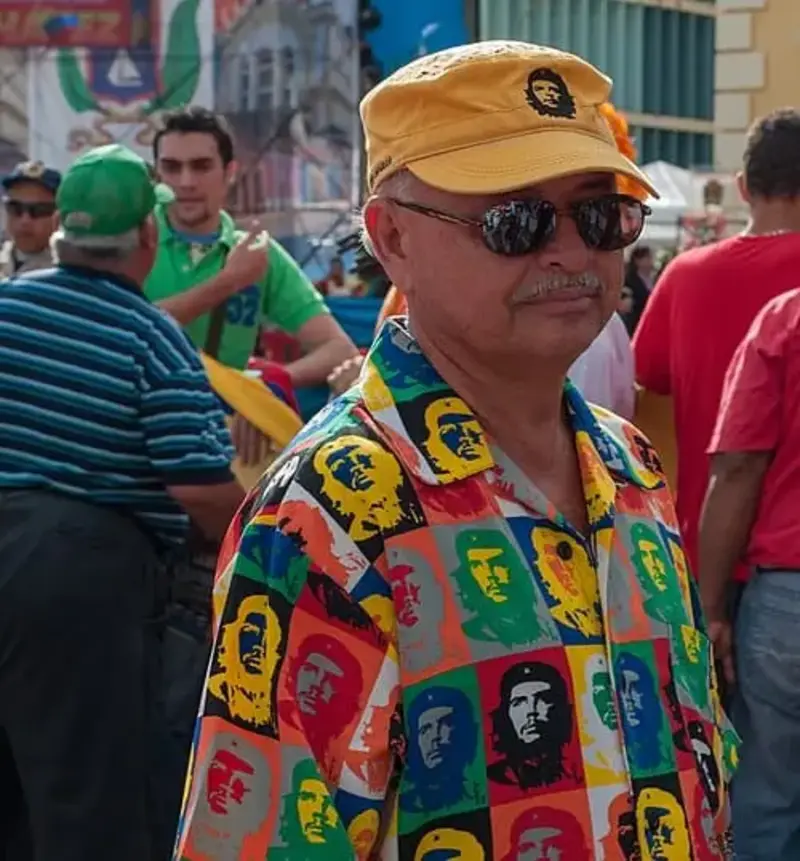
Over time, the slogan can detach from the political structure that produced it. It may become a generic sign of belonging, a brand of identity, or an emotional badge. People repeat it to indicate alignment without necessarily engaging with the original platform, analysis, or historical context. The slogan then functions less like a proposition and more like a signal.
This drift matters because slogans survive precisely by being simplified. Their power depends on compression. But compression has a cost. Once separated from the movement that gave it meaning, the phrase can be adopted by people who interpret it differently, oppose its original aims, or use it in purely aesthetic ways. The slogan remains recognizable, but the theory beneath it thins out. What was once a political sentence becomes a tribal marker.
Philosophical Schools Reduced To Quotes
Philosophy suffers this kind of drift constantly. Complex thinkers are remembered through a handful of quotations, aphorisms, or screenshot-sized fragments. These fragments are often useful, memorable, and not always wrong. The problem is that they float free of the larger argument that gave them shape.
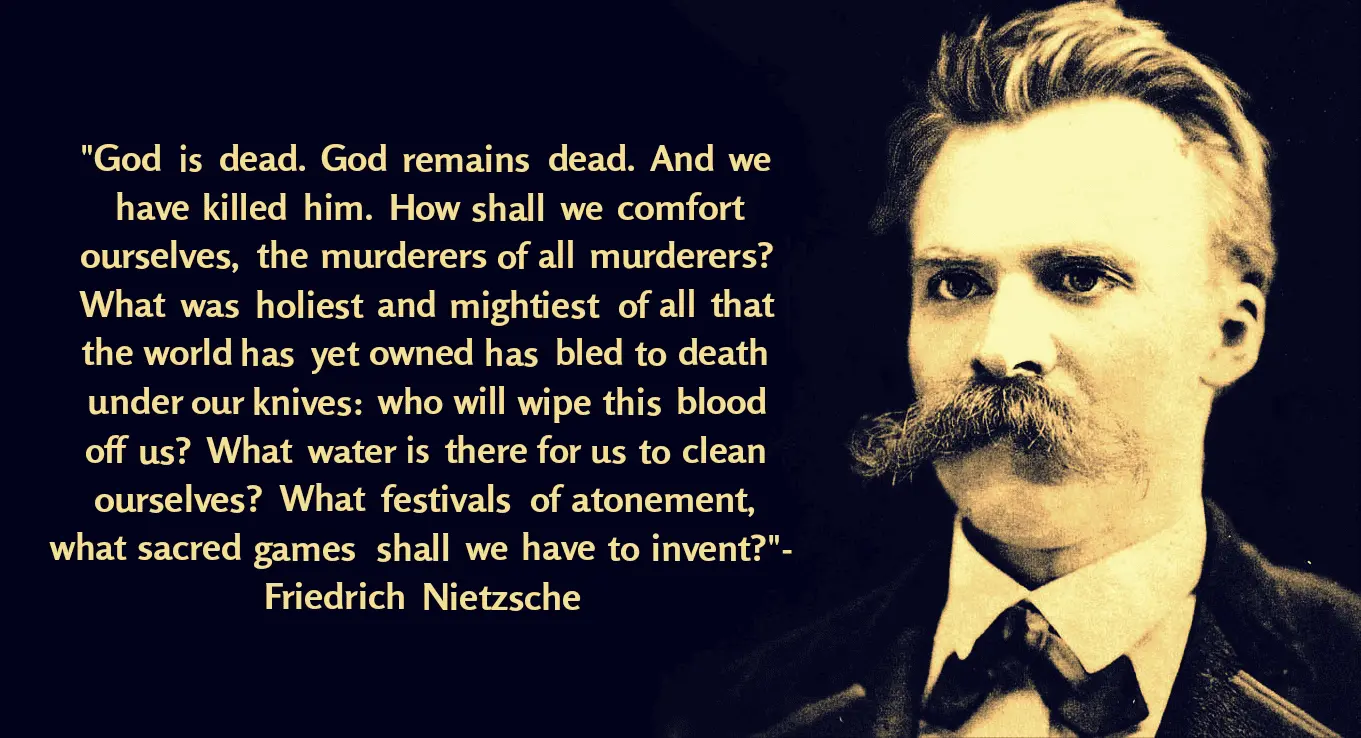
A philosopher may be reduced to a few punchy lines because those lines are easier to circulate than the surrounding reasoning. Nietzsche becomes a set of dramatic lines about strength and self-overcoming. Stoicism becomes advice about emotional restraint. Existentialism becomes a mood of sadness and individual burden. In each case, the quote is not necessarily false, but it is partial enough to mislead.
This is not just a problem of ignorance. It is a feature of transmission. Arguments are expensive to carry; quotes are cheap. A quote can be copied instantly, repeated in a caption, and used as a personality accessory. But once extracted from the structure that supports it, it begins to function as a symbolic shell. It signals intelligence, seriousness, or depth without always delivering the full intellectual content. The thinker survives, but only in fragments.
4chan Posts Turned Into Reaction Images / Internet Artifacts
A post or image from a specific subculture can travel far beyond its origin and become an internet artifact. This is especially visible with material from forums like 4chan, where posts are often produced in dense, ironic, and highly local contexts. Something made as an in-joke, insult, or throwaway comment can later become a reaction image, a meme, or a reusable expression for emotions the original community never intended.
Once the image is detached from its source, its function changes. It may no longer matter who posted it, what thread it came from, or what subculture it reflected. The image becomes a tool for reaction, not a record of origin. People use it because it captures a feeling efficiently. The original context becomes optional, then forgotten, then occasionally rediscovered as trivia.
This is the internet’s native style of transmission. It strips, repackages, and redeploys material at scale. The artifact survives because it is portable. The new use is not a corruption in the narrow sense; it is a transformation. But the transformation is real. A post made inside one social world becomes a different object when it is absorbed into another. It may retain the outline of the original joke, but it now lives by a different logic.

Taken together, these cases show that cultural drift is not a rare failure but a normal outcome of repetition. Ideas do not simply move unchanged from one mind to another. They pass through filters: memory, taste, platform incentives, subcultural desire, and the pressure to simplify. The result is often a symbolic shell that still resembles the original but no longer behaves like it.
That is not a reason to reject these later forms. Dark academia, memes, slogans, quotes, and reaction images all have their own uses. The point is only to notice the difference between a source and its descendants. Once that distinction is visible, we stop treating every repetition as faithful transmission. We begin to see culture as something that drifts, adapts, and reassigns meaning as it travels.
The Difference Between Function, Context, and Surface
To understand why ideas drift, it helps to separate an idea into three layers: function, context, and surface. These are not always cleanly divisible in practice, but as a conceptual tool they explain a great deal.
Function is what an idea was for. It is the job it performed. A political slogan may have been meant to unify a movement. A philosophical line may have been meant to compress a larger argument into a memorable form. A meme may have been designed to trigger a very specific joke inside a small group. Function answers the question:
What purpose did this serve at the moment it was created?Context is the surrounding world that made the idea meaningful. This includes the social setting, the shared references, the historical moment, and the assumptions people already had in place. Context is often invisible to later audiences because it was never printed inside the artifact itself. It lived around it. A phrase that seemed sharp and direct in one era can feel vague or absurd in another simply because the conditions that gave it force are gone.
Surface is the visible form. It is the part that can be copied, quoted, screenshotted, styled, or performed. Surface is what survives best because it is easiest to transmit. A quote can be copied without the essay it came from. A slogan can be repeated without the theory behind it. An aesthetic can be imitated without the cultural world that produced it. Surface is portable. Function and context are fragile.
Ideas often feel familiar while also missing the point. The outline remains, but the mechanism has changed. A person recognizes the phrase, the image, the tone, or the style, yet the deeper relation between form and purpose is gone. The result is not always nonsense. Sometimes the surviving surface becomes useful in a new way. A stripped-down slogan may still motivate people. An image may still communicate an emotion. An aesthetic may still create belonging. In that sense, drift is often adaptation rather than collapse.
But adaptation should not be confused with continuity. A surface resemblance does not guarantee the same meaning, and it does not preserve the original function by default. This is the central risk of cultural repetition: The visible form can outlive the conditions that made it intelligible. Once that happens, people may think they are preserving an idea when they are actually preserving only its shell.
That shell is not worthless. It can carry new work. But it is different work. The phrase, image, or style has become a descendant, not a duplicate. It belongs to the same family as the original, but not the same moment, not the same world, and not always the same intention.
This distinction matters because cultural memory often mistakes surface for substance. We recognize what looks like the original and assume the original is still there. Usually it is not. What remains is a shape that has traveled farther than its meaning.
Why People Confuse the Descendant with the Original
People usually mistake the descendant for the original because that is the version they actually meet. Most of us do not encounter ideas at their point of origin. We meet them after they have already been filtered through repetition, simplification, and social use. By the time an idea reaches us, it has often been translated into a slogan, an aesthetic, a quote, or a familiar shorthand. The later form arrives first, so it becomes the default.
Repetition makes this worse. The more often a version is seen, the more natural it feels. Familiarity creates a false sense of authenticity. A simplified form stops feeling like a reduction and starts feeling like the real thing, simply because it is the one that has been stabilized by use. What is repeated often enough begins to feel inevitable. People stop asking where it came from because the form itself now carries the weight of common sense.
Communities also attach emotion to the versions they know. A label, meme, or slogan is rarely just informational. It becomes part of belonging. People identify with it, defend it, and pass it on because it marks membership in a group. Once this happens, the descendant is protected by loyalty. Any attempt to recover the original can feel pedantic, hostile, or unnecessary. The social version has become more important than the historical one.
Simplified forms spread more easily for practical reasons as well. They are easier to teach, easier to remember, and easier to repeat without error. Institutions, schools, media outlets, and online communities often prefer compressed versions because they travel better. This creates a durable mismatch: Labels remain stable while substance changes underneath them. The name stays in place even when the thing named has shifted.
There is also the problem of access. Original meaning is often inconvenient to recover, and sometimes it is already disputed. Sources are buried in archives, language changes, context disappears, and even experts disagree about what something originally meant. In that situation, people rely on the version that is socially available. They use the form that has already won distribution, not the one that is most historically precise.
Over time, this available version becomes “The thing itself.” The descendant does not merely resemble the original; it replaces it in everyday use. That is why cultural drift is so easy to miss. We are rarely standing at the source. We are usually standing inside the afterlife of the source, mistaking continuity of shape for continuity of meaning.
What feels obvious may only be the most recent layer of inheritance.
The Value Of Recognizing Drift
Recognizing drift is not a way of becoming cynical about culture. It is a way of becoming more accurate about how culture actually works. Ideas do not travel through history as sealed containers. They pass through people, institutions, habits, feeds, and rituals. They are repeated by memory, and memory edits. They are reused, and reuse changes them.
This is not a flaw. It is the mechanism by which culture works.
This matters because it prevents the naïve certainty about labels. A word may look stable while its meaning has shifted quietly underneath it. A slogan may survive long after the movement that gave it force has faded. An aesthetic may keep its surface while losing its original function. When we recognize drift, we become less likely to treat names as guarantees. We stop assuming that a label tells us the full story.
It encourages source-checking and historical awareness. Many ideas circulate in secondhand forms that are easier to remember than their origins. If we care about what something actually meant, we have to be willing to look behind the version that is most familiar. That does not mean becoming obsessive about purity or origin myths. It means understanding that a later use may be useful without being identical to the first one.
This distinction is especially important when comparing original intent and later reuse. A phrase may begin as a precise critique and later become a generic insult. A philosophical school may begin as a disciplined argument and later become a lifestyle brand. A meme may start as a local joke and later become a universal reaction format. In each case, the later version may still work. It may even work better for its new purpose. But it is still a different object. Calling it by the same name does not erase the change.
Recognizing this drift helps us separate aesthetics from substance. The appearance of an idea can be persuasive even when the idea itself has thinned out. We are often drawn first to the visible shell: the style, the quote, the tone, the posture. But surface resemblance can hide deep discontinuity. Knowing this makes us less vulnerable to taking appearance as proof of meaning. It helps us read beyond the wrapper.
Our own views are inherited through many layers. Very little of what any of us thinks arrives untouched. We absorb phrases, values, and assumptions from schools, families, subcultures, books, and platforms. Over time, we begin to speak in forms that feel personal but are actually assembled from long chains of transmission. Recognizing drift is partly a way of noticing that we, too, are part of the relay.
This is not an attack on imitation or reinterpretation. It is not a complaint that culture changes. Culture depends on reuse. Without repetition, there is no continuity; without reinterpretation, there is no growth. The point is narrower and more modest. Awareness of drift helps us read more carefully. It keeps us from treating derivatives as if they were pure origins, and it gives us a little more humility when we think we know what an idea “really” means.
The World Is Full Of Secondhand Meaning
By the time we read, learn, or repeat most ideas, we are rarely handling something untouched. We are handling something that has already passed through other minds, other settings, and other purposes. A phrase has been quoted. A concept has been simplified. A symbol has been reused. A stance has been adapted to a new audience. What arrives to us is usually not the original object, but a version of a version of a version.
That is not a defect in culture. It is how culture is able to exists at all. Transmission always alters what it carries. Sometimes the change is slight, sometimes it is dramatic, but the basic pattern is same: memory trims, communities reshape, and repetition stabilizes whatever survives best. The result is a world full of inherited forms that feel natural precisely because they have already been processed many times.
The internet did not create this condition, but it made it impossible to ignore. Digital culture accelerates copying, fragmenting, and recombination. A quote can become a screenshot. A screenshot can become a reaction image. A reaction image can become a genre. A theory can become a slogan. A slogan can become a brand. The path from origin to reuse has always existed, but online platforms expose it at high speed and in public view.
The central question is not whether ideas get distorted. They do. The real question is what we do with that fact. We can pretend that every familiar form still carries its full original meaning, or we can learn to notice when a surface has survived while its function and context have moved on.
Culture is remembered through distortion, not preservation. Distortion is not outside the system; it is the system. Ideas survive by changing shape as they travel. They remain recognizable because they are not fixed. They endure because they are rewritten.
Every idea we inherit is already in translation. To read carefully is to remember that we are never first, only somewhere in the chain.
Sources and further reading
If you want to dig deeper into this topic, it is worth remembering that even this post is part of the process it describes. None of these ideas arrive untouched. What I wrote here has already been filtered through my own experiences, assumptions, reading habits, and way of interpreting the world. Someone else approaching the same subject would likely emphasize different examples, draw different conclusions, or frame the problem differently altogether.
That does not make any version purely correct or incorrect. It only means that meaning is always shaped by the mind carrying it forward. Even attempts to explain cultural drift become another link in the chain of reinterpretation.
Richard Dawkins — The Selfish Gene (1976) Origin of the term “meme” as a unit of cultural transmission.
Francis Heylighen & Klaas Chielens — Cultural Evolution and Memetics Explores how cultural information spreads, mutates, and survives through transmission.
Scott Atran — The Trouble with Memes: Inference versus Imitation in Cultural Creation Argues that cultural transmission is inherently unstable and constantly reshaped by interpretation.
Sara Cannizzaro — Internet Memes as Internet Signs: A Semiotic View of Digital Culture Looks at memes as evolving sign systems rather than fixed copied units.
Brent K. Jesiek — Betwixt the Popular and Academic: The Histories and Origins of Memetics Historical overview of memetics and how the concept spread beyond academia.
Robert Boyd & Peter J. Richerson — Culture and the Evolutionary Process (1985) Foundational work on cultural evolution and inherited social behavior.
Robert Boyd & Peter J. Richerson — Not by Genes Alone (2005) Examines how human culture evolves through imitation, adaptation, and selection.
Henrik Bjarneskans, Bjarne Grønnevik & Anders Sandberg — The Lifecycle of Memes Describes memes as structures that mutate during decoding and retransmission.
Liane Gabora — Five Clarifications About Cultural Evolution Challenges simplistic models of cultural replication and emphasizes reinterpretation.
Tobias Kuhn, Matjaž Perc & Dirk Helbing — Inheritance Patterns in Citation Networks Reveal Scientific Memes Studies how concepts propagate and stabilize through academic citation systems.
Marshall McLuhan — Understanding Media (1964) Important for understanding how mediums reshape meaning during transmission.
Roland Barthes — Mythologies (1957) Examines how cultural symbols become detached from their origins and treated as natural truths.
Jean Baudrillard — Simulacra and Simulation (1981) Relevant to the idea of symbols surviving after the reality beneath them disappears.
Walter Benjamin — The Work of Art in the Age of Mechanical Reproduction (1935) Early exploration of how reproduction changes the meaning and “aura” of cultural artifacts.
Umberto Eco — Travels in Hyperreality (1986) Useful for thinking about copies, representations, and cultural authenticity.
Terms for further reading
- Memetics
- Cultural evolution
- Semantic drift
- Context collapse
- Remix culture
- Semiotics
- Symbolic abstraction
- Hyperreality
- Simulacra
- Information decay
- Cultural transmission
- Participatory culture
- Virality
- Intertextuality
- Secondary orality
- Compression of meaning
- Identity signaling
- Aestheticization
- Folk reinterpretation
- Canon formation